Offshore, Maritime Industry and Energy
The Tri-City is a strategic installation and service hub on the Baltic Sea, supported by an expanding port infrastructure. Read our comprehensive report on the investment potential of this sector.
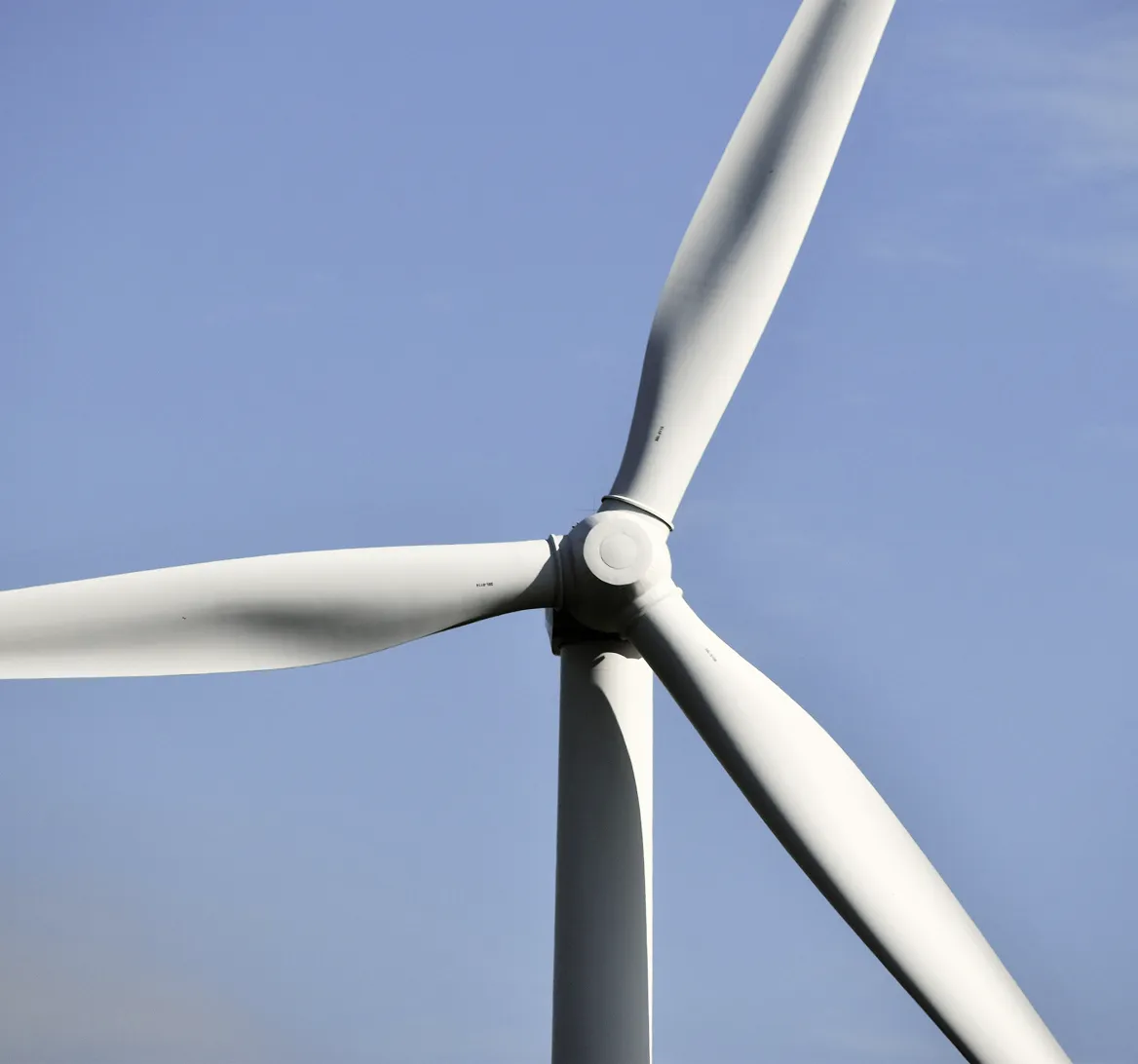
- Fully-fledged Baltic offshore wind hub: port, installation, manufacturing, design engineering, research, logistics and servicing operations concentrated in a single metropolis.
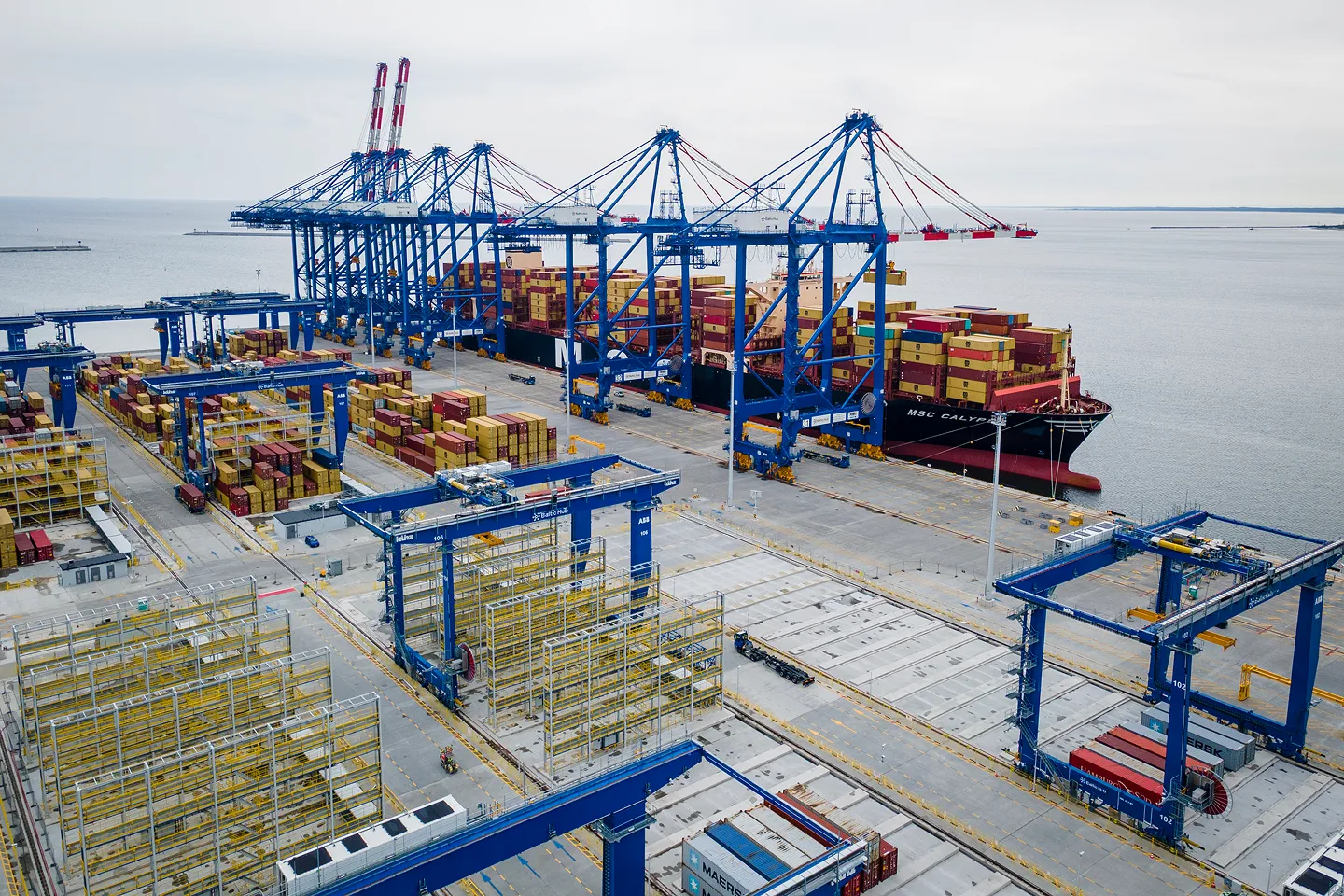
- Infrastructure: thanks to the sea ports in Gdańsk and Gdynia, the new Terminal T5 and leading shipbuilding companies, the Tri-City is a key installation and servicing hub for the Polish offshore industry.
- The installation terminal T5 at the Baltic Hub (Port of Gdańsk): 21 hectares of dedicated infrastructure for offshore wind farm deployment (leased to PGE Baltica and Ørsted).
- Local presence of offshore wind developers and manufacturers: PGE Baltica, ORLEN Neptun, Siemens Gamesa, Ocean Winds / BC-Wind, and Equinor / Polenergia.
- Offshore and marine company ecosystem: Remontowa Holding, Baltic Towers, Grupa Przemysłowa Baltic, Siemens Gamesa, CRIST, Damen, Kongsberg Maritime, Aluship Technology, Mostostal Pomorze, and Montex Shipyard.
- The HQ of Polskie Elektrownie Jądrowe (Polish Nuclear Power Plants) and Bechtel's offices in Gdańsk bolster the local power engineering ecosystem, along with competence building and the domestic supply chain.
- Strategic power engineering investment projects on the Baltic coast: PEJ-1 (Polish nuclear power plant), offshore wind farms, the LNG terminal, and grid infrastructure development.
- The WAM KPEiK scenario (National Energy and Climate Plan): 5.9 GW and 17.9 GW of installed offshore wind capacity by 2030 and 2040, respectively.
- Phase one: ca. 5.85 GW of current design capacity. The projects have entered the implementation stage and the first power generation is slated for 2026.
- URE offshore auction of December 2025: 3.435 GW won by the Bałtyk I, Baltic East and Baltica 9 projects. The next auction is planned for 2027.
- Energy for industry: in 2024, RES accounted for 66.5% of the electricity generated in Pomerania, which reasserts the region's strong position among leaders in green energy development.
- Offshore wind and nuclear power will increase the supply of energy from low- and zero-emission sources.
- Pomerania has achieved a high level of energy self-sufficiency, surpassing 80.6% in 2024.
- Power grids: the investment programme of Polskie Sieci Elektroenergetyczne (Polish Power Grids), valued at roughly PLN 66 bn, includes strategic projects in northern Poland, such as the construction of the nearly 90 km long 400 kV Choczewo-Gdańsk Przyjaźń power line, connecting offshore wind farms to the National Power Grid (KSE).
- In 2025, the key competence base at Pomeranian universities for the energy and offshore wind industries included 22.4 thousand students and at least 4.9 thousand graduates.
- 99% of students in sector-critical fields study at the region's four leading universities (Gdańsk University of Technology, Gdynia Maritime University, University of Gdańsk and the Polish Naval Academy).
- End-to-end offering of degree programmes at Tri-City universities, including offshore wind power, power engineering and RES, shipbuilding and offshore structures, mechanical engineering, electrical engineering, automation and mechatronics, navigation and hydrography, civil engineering, materials engineering, computer science, environmental protection and logistics.
- At Pomeranian technical and vocational schools, the competence base for the sector is 17.0 thousand students and 3.2 thousand graduates (2025/2026).
- Leading training centres for technical professionals in power engineering, offshore wind and maritime industries include Zespół Szkół Energetycznych (Energy Engineering School Complex), the Conradinum Schools of Shipbuilding and General Education, Zespół Szkół Morskich (Maritime School Complex) in Gdańsk, as well as Centrum Kształcenia Zawodowego i Ustawicznego No. 1 (Centre for Vocational and Continuing Education No. 1) in Gdynia. This regional base is complemented by other units, such as the District Vocational and Continuing Education Centre in Puck and technical schools in Słupsk, Wejherowo and Chojnice.
- Technical and vocational schools educate future professionals in the sector, including renewable energy technicians, power engineers, electricians, electronics technicians, automation technicians, mechatronics technicians, welder fitters, hull fitters, vessel construction technicians, ship engineers, marine navigators and specialists in port and terminal operations.
- Industry training: local GWO (Global Wind Organisation) and IRATA (Industrial Rope Access Trade Association) centres — Szkoła Morska, RelyOn, Rojam and Inter Marine / IM Training.
- Polish Offshore Wind Industry Chamber – industry representation, dialogue with public authorities and development of the domestic supply chain.
- Pomeranian Platform for the Development of Baltic Offshore Wind Power – exchange of experience, workforce training, harnessing R&D potential and informing business.
- Ship Design and Research Centre (CTO), including its offshore laboratory, and the Institute of Fluid-Flow Machinery of the Polish Academy of Sciences – R&D in hydrodynamics, vibroacoustics, materials and corrosion.
- Blue Baltic Community: mapping of regional suppliers' competencies and networking of companies, startups and universities.
- Offshore Centre and Maritime Institute of Gdynia Maritime University – environmental, geotechnical, hydrographic and electronic research and surveys, as well as documentation for offshore investment projects.
- Industry events: PowerConnect, Offshore Wind – Logistics & Supplies, BALTEXPO, Maritime Economy Forum Gdynia, and Supplier Days held by local developers, including PGE Baltica.
Key Companies
Remontowa Holding
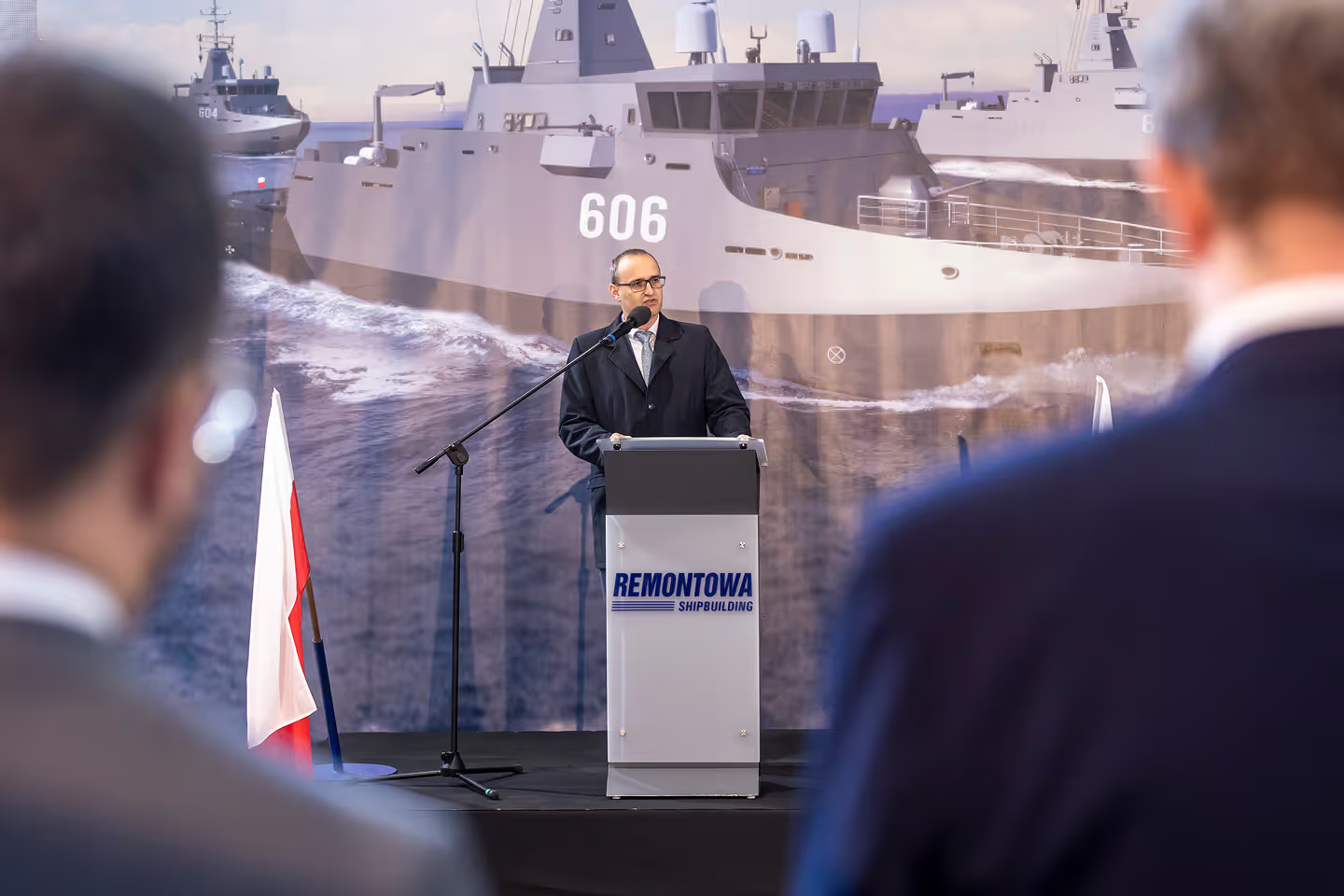
The largest Polish shipbuilding group (20+ business units). Offshore and shipbuilding, LNG systems, design engineering and servicing – one of the largest employers in Pomerania.
Baltic Towers
Manufacturing of offshore wind turbine towers. Large-scale steel structures for the offshore industry. A joint venture between the Industrial Development Agency (ARP) and GRI Renewable Industries.
Grupa Przemysłowa Baltic
A holding established by the Industrial Development Agency (ARP), comprising Stocznia Gdańska, Energomontaż-Północ Gdynia and Baltic Operator. Tier-1 supplier directly for wind farm investors.
Damen
Three business units: vessel building (Damen Shipyards), design engineering centre (Damen Engineering), and manufacturing and delivery of components (Damen Marine Components) for shipyards.
PGE Baltica
Implements the Baltica 2 and 3 projects (ca. 2.5 GW in total). Leaseholder of the installation terminal T5 at the Baltic Hub.
CRIST
A shipyard specialising in offshore vessels for servicing wind farms, as well as offshore platforms and steel structures. Production for export markets.
MEWO
Environmental surveys, research and inspection of underwater infrastructure – key services during the preparation, construction and operation of offshore wind farms.
Siemens Gamesa
The Baltic Sea Offshore Execution Centre: planning and management of offshore wind farm projects. Installation and commissioning of offshore wind turbines in the Baltic Sea.
ASE Group
A Gdańsk-based engineering and technology group comprising several specialised business units and employing over 400 engineers, technologists and consultants, providing advanced solutions for industry, energy and the environment.
RelyOn
An international training group specialising in preparing professionals for high-risk sectors, including wind power (both onshore and offshore).
ORLEN Neptun
A member of the ORLEN Group responsible for developing further offshore wind projects, including Baltic East and the Baltic West portfolio.
Bota Group
Maintenance services for the wind power and maritime sectors, including wind turbine servicing and repairs, technical works, automation, hydraulics, propulsion systems and ship outfitting.
Lyten
Manufacturing of advanced energy storage systems, including BESS battery systems and innovative cell technologies, as well as research and development.
SPIE Energy
Design, construction and modernisation of high- and medium-voltage power infrastructure for electricity distribution and transmission companies.
Seaonics
Design and manufacturing of advanced electrical, propulsion and control systems for the maritime and offshore sectors.
Bechtel
Engineering and operations centre of the main contractor for Poland's first nuclear power plant, based on AP1000 technology.
Investment Advantages
Economic environment

- Metropolitan Area of Gdansk, Gdynia, Sopot — over 1.6 million residents, positive migration balance
- GDP per capita in the Tri-City is PLN 132,000 (approx. 150% of the national average)
- Gdansk ranks among the happiest European cities (EC report: Quality of Life in European Cities)
- Access to the Polish Investment Zone (including CIT exemption)
Infrastructure

- 194 ha of industrial investment sites available in Gdansk
- Port of Gdansk: 80.4 million tonnes of cargo, 2.8 million TEU (2025) — the largest container port on the Baltic Sea
- Gdansk Lech Wałęsa Airport: 98 routes, 27 countries, ~7.4 million passengers (2025)
- 1.07 million m² of office space and 1.82 million m² of warehouse space in the Tri-City (Knight Frank, Q3 2025)
Key Industries
We are building Gdańsk's economic strength on the sectors with the greatest potential, focusing on innovation and sustainable development. Discover the region's most promising economic pillars.